
13 Practical Energy Saving Tips to Lower Your Electricity Bill
You don’t need an expensive solar system or a dark house — understanding how your bill is calculated and adjusting daily habits can meaningfully cut your units.
Electricity tariffs in Pakistan are at an all-time high, and managing the monthly bill has become a top household priority nationwide. Many people assume lowering it requires an expensive solar system or living without power — that’s not true. Understanding how your DISCO calculates your bill, and adjusting daily habits, can meaningfully cut your units.
Your bill is built from several components: units consumed, tariff slabs, Fuel Price Adjustment (FPA), fixed charges, and taxes. Knowing which one is driving your bill up makes it easier to target your savings — see our bill breakdown guide for the full picture.
Know Your Meter: Do You Pay ‘Peak Rates’?
Before you start saving, know how you’re actually charged — not everyone pays more at night.
Single-Phase Meter (Load Under 5 kW)
Most domestic households fall under Tariff A-1, charged on total monthly units (slabs) — running an AC at 8 PM costs the same as running it at 8 AM. Your goal here is slab management: keep monthly consumption low enough to stay in the protected tariff range, or at least under 300 units. Crossing a slab boundary raises the rate on every unit, not just the extra ones.
Three-Phase / TOU Meter (Load Above 5 kW)
If you’re on a digital three-phase meter, you’re likely on Time-of-Use billing with separate Peak and Off-Peak rates — electricity is meaningfully more expensive during evening peak hours (typically 5–11 PM) than off-peak. Your goal is to shift heavy usage — ACs, iron, water pump — to off-peak hours. Actual savings depend on your specific tariff category and usage pattern.
For everyone, regardless of meter type: avoid running heavy appliances during evening hours (6–10 PM) where possible — voltage often drops during this window in many areas, and low voltage makes motors (fridges, fans) heat up and draw more current, indirectly raising consumption and risking appliance damage. This is about appliance efficiency and voltage stability, not a separate peak charge for single-phase consumers.
13 Practical Ways to Lower Your Bill
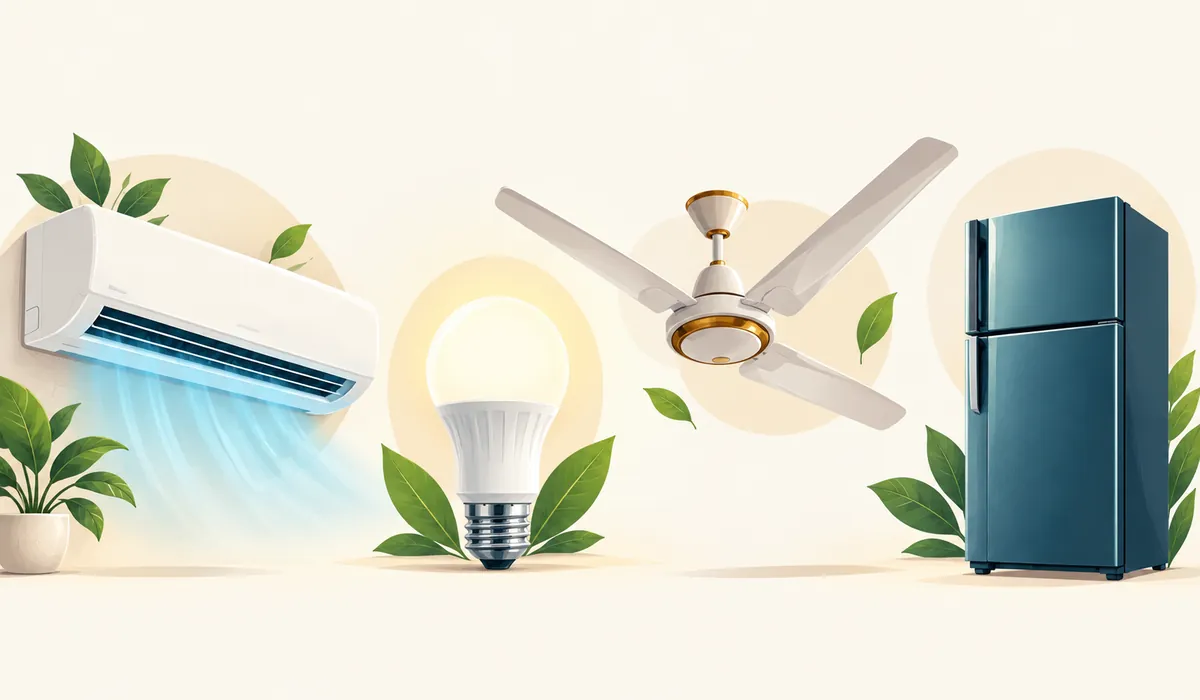
1. Slab Management
For most families, the gap between a modest bill and a painful one is often just 10–20 units. Check your meter reading around the middle of your billing cycle (see the “Reading Date” on your previous bill). If you’re already well into your monthly allowance with over a week left, that’s your signal to cut back hard to avoid crossing into the next slab. Use a Bill Calculator to model how a 10–20 unit swing changes your final bill before your cycle closes.
For properties with multiple households under one roof, it’s worth exploring separate, legally approved connections per portion — subject to your DISCO’s rules and inspection. Separate connections are billed independently and can produce a better outcome depending on each portion’s consumption.
2. The AC Strategy: 26°C + an Efficient Fan
Setting your AC to 18°C doesn’t cool the room faster — it just forces the compressor to run non-stop. Set it to 26°C and run a ceiling fan on low: the fan circulates cool air so 26°C feels like 22°C, while the compressor gets to cycle off more. Each degree higher on the thermostat saves roughly 4–6% in energy, so even moving from 22°C to 26°C adds up. Swapping an old ceiling fan (80–100 watts) for a modern AC/DC inverter fan (30–50 watts at full speed) compounds the saving.
The government’s Prime Minister’s Fan Replacement Program lets you swap old, inefficient fans for 5-star rated energy-saving fans on easy installments added to your bill — see our PM Fan Replacement Program guide for how to apply.
3. Winter Heating: Insulate First
In colder regions, winter bills often exceed summer ones because of electric heating. A rod heater/blower is an energy disaster, drawing 1,000–1,500 watts continuously. Focus on retaining heat first: heavy curtains, draft stoppers under doors, carpets on cold floors. If you need electric heat, an oil-filled radiator is more efficient than a rod heater since it retains heat after being switched off. Reflective roofing material and floor rugs also cut heat loss meaningfully.
4. The Geyser Timer Rule
Leaving an electric geyser on 24/7 is like keeping a kettle boiling all day — it’s a silent driver of winter bills. Turn it on about an hour before you need it and off immediately after. Where possible, an instant water heater eliminates standby loss entirely. And lower the thermostat from “Hot” to “Warm” — you’re mixing in cold water for bathing anyway, so there’s no reason to overheat it first.
5. Replace Old CFLs With LED Bulbs
A 24-watt CFL “energy saver” gives the same light as a 12-watt LED. Replacing just five bulbs saves 60 watts per hour of use — over a year, that’s a meaningful chunk off your bill. During the day, prioritise natural light over artificial lighting; it costs nothing and keeps the room cooler too.
6. Unplug ‘Vampire’ Electronics
TVs, microwaves and UPS inverters draw power even switched ‘off’ while plugged in — phantom load. Chargers, set-top boxes and routers are common silent consumers, and cutting this can save roughly 5–8% on your monthly bill on its own. Use a switched power strip to cut several idle devices at once, switch the TV off at the switchboard rather than the remote, and unplug chargers when not in use.
7. Efficient Ironing: Batch It
An electric iron draws around 1,000 watts, and most of that goes into heating up from cold. Iron a week’s clothes in one session rather than one outfit each morning — you use the accumulated heat far more efficiently. On a three-phase meter, schedule this during off-peak hours.
8. Refrigerator Airflow & Seals
A fridge pushed tight against a wall has to work harder to expel heat — pull it out about 6 inches. Test the door seal by closing it on a piece of paper: if you can pull the paper out easily, the gasket needs replacing. Defrost and clean the coils periodically too — a dirty coil makes the compressor work harder.
9. Use Cross-Ventilation
In areas with cool evening breezes, open windows on opposite sides of the house before reaching for the fan or AC — cross-ventilation pushes hot air out and cools the home naturally, for free.
10. Service Your Appliances
A dusty fan runs slower but still draws full power. A dirty AC filter blocks airflow, forcing the unit to run longer. Clean AC filters every couple of weeks in summer, clean fan blades at the start of the season, and if you have solar panels, keep them clean and free of shade — dust, bird droppings and even partial shading noticeably cut output.
11. Optimise Your Water Pump
A standard 1HP motor draws about 1 kWh per hour of runtime. Run pumps only when needed, fix leaks that trigger repeated cycling, and consider a more efficient motor if yours is old. On a three-phase meter, scheduling pump use for off-peak hours is an easy win.
12. Monitor What You Use
You can’t manage what you don’t measure. Use a load calculator to see which appliances are driving your consumption, and keep a rough weekly log of your meter reading so you can spot an unusual spike before the billing cycle closes.
13. Make It a Household Effort
These habits work best when the whole household is on board — kids turning off lights when leaving a room, everyone aware of the daily unit target. Collective behaviour change alone can cut 15–20% off a monthly bill with zero investment.
Worth Investing In: Inverters & Solar
If you have budget for an upgrade, inverter ACs and refrigerators are worth prioritising — they start on lower power draw and cut consumption by roughly 40–60% once at temperature (ACs) or 20–35% (fridges) versus conventional models, and they also cope better with voltage fluctuations common in many areas. Even a small solar system can offset your heaviest daytime loads (water motor, ironing, washing machine), keeping you in a lower billing slab — and if you generate a surplus, net metering lets you send it back to the grid. See our net metering guide for how that works today.

In Short
Lowering your bill doesn’t take a miracle — it takes consistency. Turning off the geyser on time, setting the AC to 26°C, unplugging idle chargers: these small habits compound over 30 days into a noticeably smaller bill.
Keep reading
Related guides
Prime Minister (PM) Fan Replacement Program 2026 — Complete Step-by-Step Guide
How to apply for NEECA-certified 5-star fans on installment through your electricity bill — and the fine print worth reading before you do.
AMI Smart Meters & the PTV Fee Removal: What Changed on Your Bill
Two real changes hitting Pakistani electricity bills recently — the shift to AMI smart meters on new connections, and the permanent removal of the Rs. 35…
Government Introduces New Electricity Bill Format Across All DISCOs (2026 Guide)
What changed in the redesigned bill layout, what the new QR codes actually do, and whether your rates are affected.
Put the guide to work
Free tools for all 11 DISCOs. No sign-up, nothing stored.