
Electric Load Calculator for Home Appliances in Pakistan
Work out your total connected load and daily/monthly energy use before you plug numbers into the Bill Calculator — applies to any DISCO across Pakistan.
PITC Load & kWh Calculator
Enter quantities and daily usage time. Calculate energy (kWh) or connected load. Default period: 30 days.
Mode
Period
| Appliance | Wattage (W) | Quantity | Hours / day |
|---|
Why Calculating Appliance Load Matters
Calculating your household’s total load helps you:
- Estimate what your monthly electricity bill will look like before it arrives.
- Size a UPS, generator, or solar system correctly for your actual usage.
- Identify high-power devices worth replacing with more efficient models.
Managing load intelligently lowers your own costs and also supports Pakistan’s wider effort to reduce peak national electricity demand.
How to Calculate Electrical Load
- List your appliances and note each one’s power rating in watts (usually printed on a label on the back or base of the appliance).
- Add up all wattages for your total connected load in watts or kilowatts.
Example: 2 LED bulbs (12 W each) + 1 fan (80 W) = 104 W total load. - Energy consumed (kWh) = (Wattage × Hours used) ÷ 1000.
Example: a 100 W bulb run for 5 hours = 0.5 kWh.
This is exactly what the calculator above does automatically — enter quantities and daily hours for each appliance and it totals your load and energy use for you.
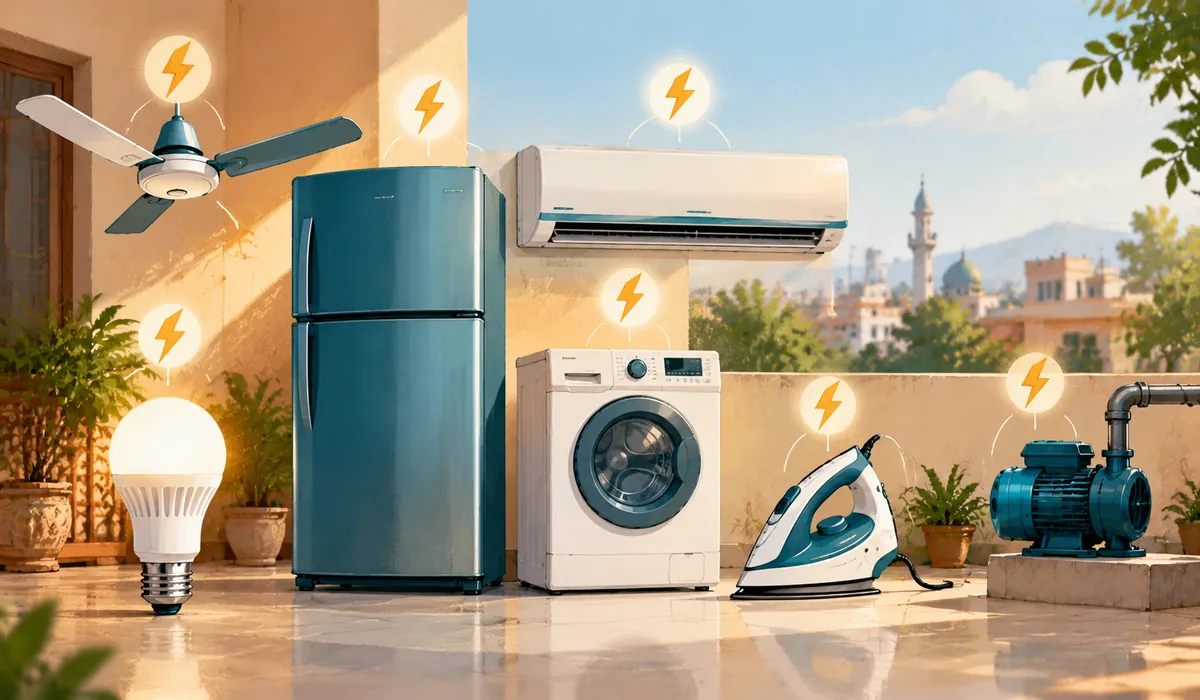
Common Household Appliance Wattages
Lighting
| Appliance | Typical Wattage | Idle Power |
|---|---|---|
| LED bulb | 7–15 W | 0 W |
| Fluorescent tube | 36–40 W | 0 W |
| Incandescent bulb | 60–100 W | 0 W |
Modern LED lights cut electricity use by roughly 80–90% compared to traditional incandescent bulbs.
Fans
| Type | Wattage | Notes |
|---|---|---|
| Traditional ceiling fan | 80–100 W | Standard AC motor |
| Energy-efficient DC/inverter fan | 30–40 W | Up to ~70% power savings |
| Table / pedestal fan | 40–80 W | Portable models |
The federal PM Fan Replacement Program encourages households nationwide to swap old 80 W fans for efficient inverter fans, which can add up to significant nationwide power savings at peak hours.
Electronics
| Device | Active Power | Standby |
|---|---|---|
| Mobile charger | 5 W | 0.3 W |
| Laptop | 60–100 W | 1–2 W |
| LED TV (42") | 100–120 W | ~1 W |
Unplugging chargers or switching off power strips when not in use eliminates this standby loss entirely.
Kitchen Appliances
| Appliance | Wattage | Notes |
|---|---|---|
| Microwave oven | 1000 W | 2–4 W standby for clock |
| Electric kettle | 1500 W | Short-term high draw |
| Blender / juicer | 300–600 W | Minimal usage time |
| Refrigerator | 150–200 W (avg.) | Compressor cycles on/off |
Inverter refrigerators and kettles with auto-shutoff can meaningfully reduce electricity use compared to older models.
Laundry & Cleaning
| Appliance | Wattage | Notes |
|---|---|---|
| Washing machine | 500–800 W | Motor-driven, no heater |
| Clothes iron | 1000–1200 W | Thermostat-controlled |
| Vacuum cleaner | 600–1200 W | Draws power only while in use |
Cooling & Heating
| Appliance | Power Range | Details |
|---|---|---|
| Air conditioner (1 Ton) | 1200–1500 W | Inverter AC can save up to ~40% |
| Room heater | 1000–2000 W | Used seasonally |
| Electric geyser | 1500–3000 W | Consider a gas alternative if available |
Water Systems
| Appliance | Wattage | Notes |
|---|---|---|
| Water pump (0.5 HP) | ~400 W | Intermittent use |
| Water pump (1 HP) | ~750 W | Larger buildings |
| Water dispenser | 100–150 W | Minimal standby draw |
Switching pumps off manually (rather than leaving them on a timer you forget about) avoids accidental long-running loads.
Energy-Efficient Choices for Pakistani Homes
- Replace old fans with 30 W DC/inverter models where the budget allows.
- Use LED lighting instead of incandescent or CFL bulbs.
- Switch to inverter ACs and refrigerators for smarter load control.
- Cut standby losses by turning off TVs, routers and chargers when not actually in use.
These small changes reduce your own bill and, multiplied across millions of households, help ease pressure on the national grid at peak hours.
Using the Load Calculator
The calculator at the top of this page works for any DISCO in Pakistan — the physical wattage of an appliance and the formula for converting it to units consumed don’t change by distribution company. Select appliances from the Top 10 list or search the full appliance list, enter how many you have and how many hours a day you run them, then hit Calculate. The tool totals your connected load in watts/kW and your estimated energy use in kWh for whatever period you choose (1, 7, 30 days, or a custom range).
Once you have an energy estimate, click Go to Bill Calculator to carry those units straight into our Electricity Bill Calculator and see an estimated rupee cost.
Frequently Asked Questions
How do I calculate my home’s total electrical load?
Add up the wattage of every appliance you use at the same time. For example, 2 LED bulbs (12 W each) plus one 80 W fan equals 104 W, or 0.104 kW.
What is the wattage of a 1-ton air conditioner?
A 1-ton split AC typically draws 1200–1500 W on startup. Inverter models can drop to 500–800 W once the room has cooled and the compressor is cycling at a lower speed.
How many watts does a ceiling fan use in Pakistan?
Standard AC-motor fans use 80–100 W, while inverter (BLDC/DC) fans use only 30–40 W at full speed for comparable airflow.
How much electricity does a refrigerator consume daily?
A modern fridge averages roughly 1–2 kWh per day as its compressor cycles on and off. Older or larger units can use 30–50% more.
How can I reduce my electricity bill using this information?
Prioritise the appliances with the highest watt-hours, not just the highest wattage — a fan running 10 hours a day often costs more over a month than an iron used for 20 minutes. Combine efficient appliances (LED bulbs, inverter fans and ACs) with cutting standby losses on electronics.